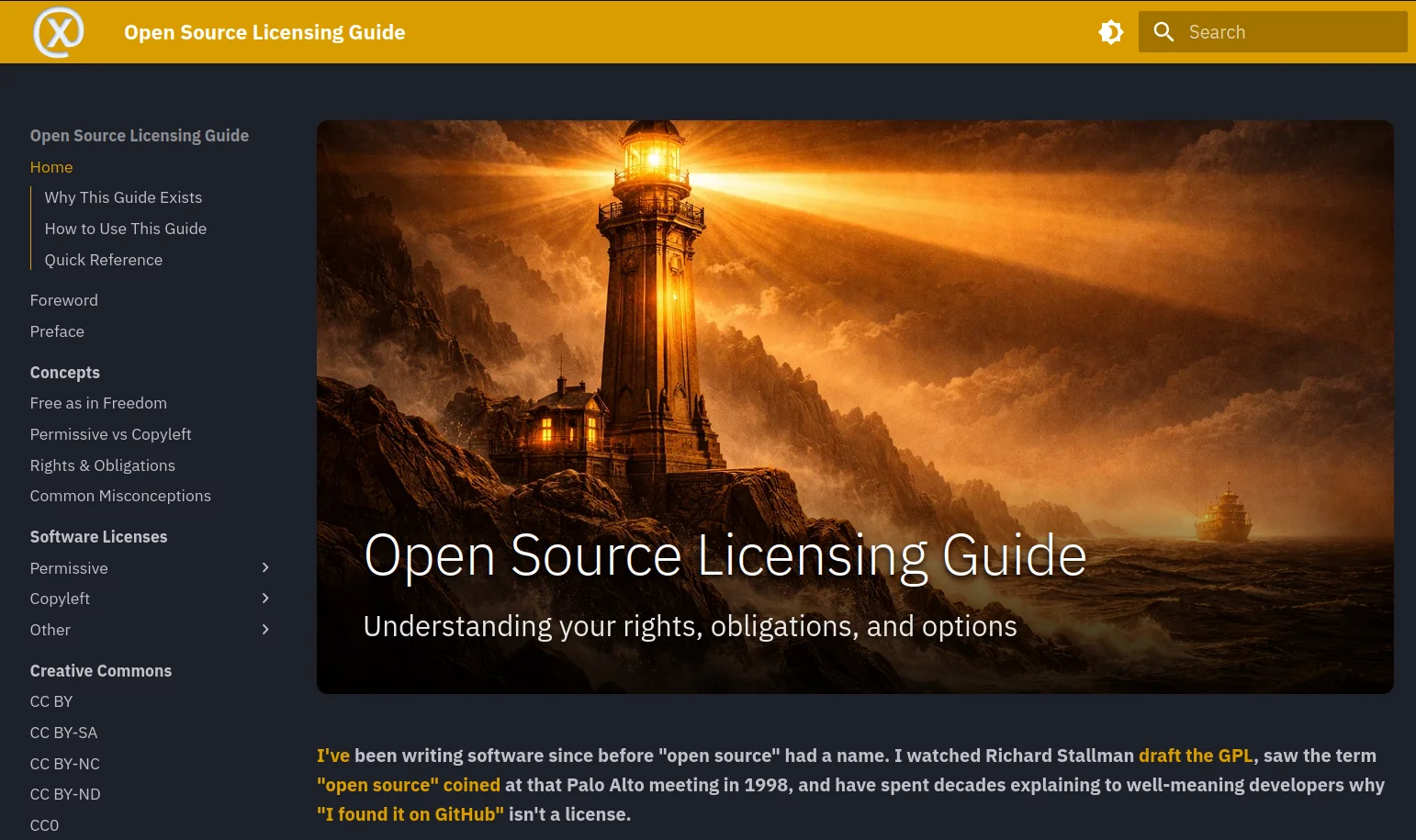
Open Source Licensing Guide
My day job involves helping researchers navigate software development — and licensing questions come up constantly. The existing resources are aimed at professional developers who already speak the language. But engineers and scientists need practical advice they can actually question and verify. “Just use MIT” isn’t helpful when you don’t understand what that means or why it matters.
So I built a guide that ties concepts to consequences. Not a list of dos and don’ts, but a narrative: here’s what happened when projects ignored this, here’s why these terms exist, here’s the actual tradeoff you’re making. Engineers respond better to “here’s what went wrong and why” than “follow these rules because I said so.”
The guide covers permissive licenses (MIT, Apache 2.0, BSD), copyleft licenses (GPL, LGPL, MPL 2.0), Creative Commons for non-code materials, and the murky world of source-available licensing. Each license gets plain-language explanation of rights, obligations, and gotchas. Real case studies include Oracle v. Google, the Redis relicensing controversy, and other moments where licensing went sideways.
The structure follows a learning path: foundational concepts about freedom and rights, deep dives into specific licenses, practical guidance on choosing and complying, and historical lessons from notable failures. Comparison tables and a glossary round it out.
Built with MkDocs and Material theme. Research and writing assisted by Claude.